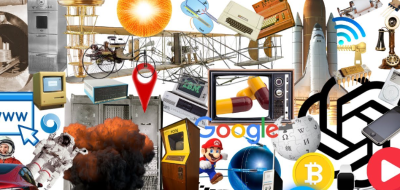
Technological advancements have not only transformed human lifestyles but also shaped global values. With continuous technological development and progress, our lifestyles, social structures, and values are undergoing profound changes. The impact of technology on social values is a complex and multi-layered process.
As science becomes more technologized, technology more scientific, and the integration of science and technology becomes more prominent, the scientific era has evolved into the technological era. Technological development not only has a significant impact on the natural world but has also permeated all aspects of human society, from living environments, production methods, and lifestyles to communication methods, and even ways of thinking and values. While technology has benefited humanity, the challenges it brings also require proactive responses.
Technological development has created enormous economic opportunities for society
The emergence of new technologies such as the internet, artificial intelligence, and big data has spawned many new industries and business models. These technological innovations have provided more employment and entrepreneurial opportunities, greatly improving people's living standards. Furthermore, technology has enabled faster and wider dissemination of information, promoting globalization and international exchange, thereby strengthening understanding and respect between different cultures. However, behind the rapid development of technology, there are also some issues that conflict with social values. The first is the issue of privacy. With the increasing abundance of personal data and the widespread adoption of smart devices, the protection of personal privacy has become a crucial issue. The data collection and management methods employed by technology companies may pose a risk of data leakage, thereby infringing on individual privacy rights. This has sparked discussions about privacy rights and personal information protection, prompting countries to formulate corresponding laws and policies to protect individual privacy and data security.
The rapid development of technology also presents challenges to social ethics and moral values
Taking artificial intelligence (AI) as an example, with the advancements in machine learning and deep learning, AI technology is expected to possess higher cognitive abilities and autonomous decision-making capabilities. However, whether AI can possess moral and ethical judgment capabilities, and how to ensure the ethical and impartial nature of AI technology, still warrants in-depth discussion. Technological development is not merely about technological progress; it also needs to be combined with moral and ethical concepts to better serve society.
Technological development has also brought a significant impact on societal educational concepts
With the rise of online education and the widespread adoption of distance learning, traditional education methods are undergoing transformation. Schools and teachers need to adapt to new teaching models, and students need to cultivate self-learning and information processing abilities. This is not only a challenge to the education system but also a rethinking of traditional educational concepts. The impact of technology on educational concepts will guide people to rethink the goals and methods of education, prompting education to develop in a more humane and personalized direction.
Conclusion
How humanity uses technology to benefit itself depends on the value orientation with which it treats and utilizes technology. The core of culture is values. As people's overall perception of the value and magnitude of the people, things, and events around them, values are the guiding principles for people's behavior. It can be said that values are ubiquitous and pervasive, running through all of people's activities, reflecting people's deep-seated evaluation system, and influencing their cognition, judgment, choices, and actions. The establishment and education of correct values have an irreplaceable function for social development.