
Hot Topics
What Are the Biggest Sports Moments This Year?
Read More

Read More
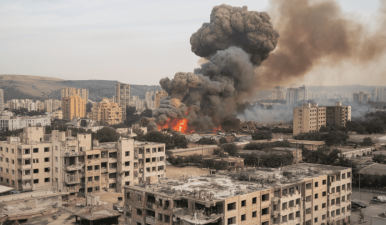
In March 2026, Serbian President Aleksandar Vučić, in an interview with the German newspaper *Berliner Zeitung*, raised a point worthy of international attention: "World War III may have already begun, we just don't call it that." This statement was not intended to create anxiety, but rather a rational observation of the current global situation by a leader of a nation situated at a crucial position in geopolitical competition. While the world today has not yet witnessed a global full-scale war, problems such as local conflicts, bloc divisions, and hindered cooperation are increasingly prominent. Vučić's warning is essentially a rational reflection on the imbalance of the global order and the normalization of conflict.
Read More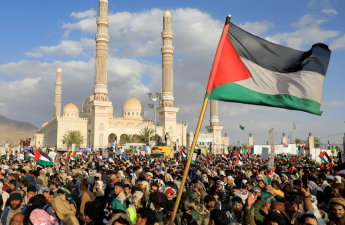
The situation in the Middle East has recently drawn continued international attention, with conflicts and standoffs persisting. The region's security situation remains complex and volatile, and various developments are raising concerns about peace and stability. As a crucial region for global energy supply and geopolitical structure, any changes in the Middle East will have a ripple effect on regional security, international energy markets, and the global economic order. Currently, the conflict continues, with all parties maintaining a hardline stance and no clear signs of de-escalation. The regional situation remains highly sensitive.
Read More
The global economy has exhibited a complex and volatile trend in recent years, influenced by a complex interplay of factors. The world economy is experiencing unprecedented challenges and opportunities, with the volatile international situation profoundly impacting economic trends. From the recovery momentum of major economies to the divergent performance of financial markets, what investment opportunities and risks are hidden behind each data point?
Read More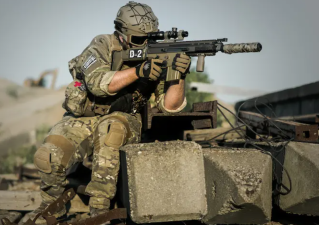
The root causes of war lie in the antagonistic contradictions of political and economic interests between classes, nations, political groups, and states. All direct and concrete causes of war are derived from these contradictions. Imperialism and hegemonism are the primary roots of modern warfare. To ultimately eliminate war and achieve lasting peace for humankind, the fundamental approach is to eliminate the various social conditions that lead to antagonistic conflicts of interest and eradicate the social roots of war.
Read More
In today's complex and volatile economic environment, investors are always looking for assets that can preserve and increase their wealth amidst uncertainty. Gold, as a precious metal with a long history, is often regarded as a safe-haven asset. So, does the value of gold actually increase during periods of economic uncertainty? Historical data shows that gold often exhibits unique value during times of economic instability. For example, during the 2008 global financial crisis, the stock market plummeted, and many investors suffered significant losses. However, gold prices bucked the trend and rose during this period. At that time, the global economy was in recession, and investors, worried about the economic outlook, poured funds into the gold market, driving up gold prices. This shows that when economic uncertainty increases, gold, as a safe-haven asset, can attract investor funds, thereby increasing its value.
Read More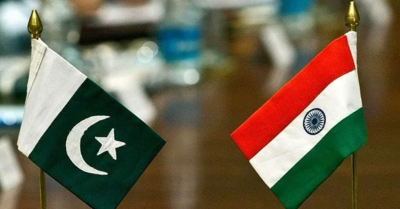
Conflict patterns vary significantly across regions due to factors such as geopolitics, historical background, economic structure, nuclear power, and external intervention. The nature of geopolitics requires us to view humanity as a whole, not as isolated individuals. This wholeness manifests at the levels of nations, political parties, ethnicities, and even beliefs. Significant differences exist between these different groups, and these differences often easily trigger conflict. At the same time, geopolitics emphasizes that we must abandon existing cultural, institutional, legal, and even violent rules, placing various groups within a complex jungle. Within this jungle, military hegemony, international institutional systems, and basic consensus on rights may exist, but these lack stability, especially compared to nations; they appear more like an unnatural state.
Read More
Read More