Why Global Markets Are Moving in New Directions
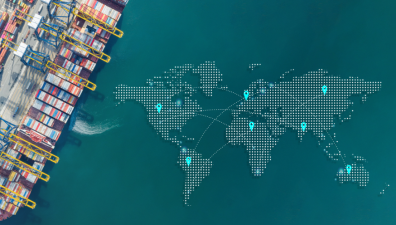
The global market refers to the vast area of exchange and flow of factors of production such as goods, services, capital, and labor worldwide. It encompasses economic activities including trade, investment, and finance, and consists of interconnected sub-markets such as stocks, bonds, foreign exchange, and commodities, involving multiple stakeholders including businesses, consumers, governments, and financial institutions.
Since its introduction in 1981 by Antoine van Agtermayer, an employee of the International Finance Corporation, the concept of "emerging markets" has embodied vitality, potential, and hope, giving rise to a series of related asset classes and indices such as the MSCI Emerging Markets Index, gradually familiarizing global investors with these rising economic forces. These economies have experienced growing pains and external shocks, encountering difficulties such as currency crises and sudden halts in capital flows, but have also achieved accelerated growth through iteration. Entering 2026, with the continued improvement of the fundamentals of most emerging market countries, the continuous refinement of their policy frameworks, and the accurate grasp of global development opportunities, their economic growth has demonstrated strong resilience, becoming the core engine of global economic growth. This rise is not accidental, but rather the inevitable result of the synergistic effect of multiple driving forces.
Analysis of Global Market Trends:
- Digitalization and Technological Innovation Drive Market Transformation: The development of information technology has propelled the rapid rise of emerging fields such as e-commerce and digital finance. For example, online shopping platforms have broken down geographical barriers, making the flow of goods more convenient; fintech companies, through big data and artificial intelligence, provide low-cost financial services, reducing transaction costs and improving market efficiency. This transformation has reshaped the competitive landscape of the global market, prompting traditional enterprises to accelerate their digital transformation to adapt to the new environment.
- The Rise of Emerging Economies Changes the Global Economic Landscape: Emerging economies such as China, India, and Brazil, with their rapidly growing economies, have seen their share of global trade and investment continue to rise. By expanding exports, attracting foreign investment, and promoting regional economic cooperation, they are gradually becoming key nodes in the global supply chain. This trend promotes global economic diversification, weakens the dominance of traditional developed economies, and pushes the international economic order towards a more balanced direction.
- Trade Protectionism Brings Uncertainty and Risk: Some countries have implemented trade protectionism through measures such as imposing tariffs and setting up technical barriers, leading to an increase in global trade disputes and disruptions to supply chains. For example, the Sino-US trade friction once prompted multinational corporations to adjust their production layout and increase operating costs. While such policies may protect domestic industries in the short term, they will, in the long run, inhibit global economic growth and exacerbate the instability of international economic cooperation.
- Sustainable development has become a core market issue. Global climate change and environmental pressures are prompting businesses and investors to incorporate environmental, social, and governance (ESG) factors into their decision-making frameworks. Green finance is expanding, with a surge in green bond issuance; renewable energy and the circular economy are attracting significant capital investment. This trend not only guides funds towards environmental protection but also drives companies to optimize production processes, reduce carbon emissions, and form a new model of coordinated economic and environmental development.
Conclusion
The global market is undergoing multiple transformations, including digital penetration, the rise of emerging economies, the impact of trade protectionism, and the transition to sustainable development. These trends are intertwined, bringing both improved resource allocation efficiency and new drivers of economic growth, while also triggering challenges such as supply chain restructuring and policy conflicts. Market participants need to dynamically assess risks and opportunities, adapting to changes through technological innovation, diversification, and ESG practices. Policymakers, on the other hand, need to balance protectionism with open cooperation to jointly maintain the stability and prosperity of the global market.