With the smooth flow of information and increasingly close international exchanges, people's attention is no longer limited to local or domestic affairs, but extends to global events. In this era of deepening globalization, international news, like tightly interwoven threads, connects the destinies of people around the world. From fierce geopolitical competition to subtle shifts in the economic landscape; from the awe-inspiring moments of technological breakthroughs to heartwarming stories of cultural exchange, a vibrant and far-reaching drama unfolds on the international stage every day. Paying attention to international news is no longer the "privilege" of a few, but a "required course" for everyone to understand the world, plan their lives, and comprehend diversity. It helps us penetrate the fog of information, see the deeper logic behind international relations, and grasp the trends of the times.
Artificial Intelligence Reshaping News Production and Distribution:
AI technology is transforming from an auxiliary tool into a core driving force for the news industry, promoting the "human-machine co-creation" model as mainstream. On the one hand, news organizations utilize AI for content generation, personalized recommendations, and fact-checking to improve efficiency; on the other hand, they also face challenges such as algorithmic bias, deepfakes, and the proliferation of misinformation, urgently requiring the establishment of a new technological ethics framework.
The Crisis of Credibility in Traditional Media and the Rise of Alternative Voices:
Against the backdrop of a "super election year" and multiple geopolitical crises, public trust in traditional mainstream media has continued to decline, exacerbating the phenomenon of "news avoidance." This has been replaced by the rise of alternative information sources such as "digital political influencers" on platforms like podcasts, short videos, and live streaming. These emerging opinion leaders, with their emotional expressions, clear stances, and relatable narratives, have attracted a large number of young and disillusioned audiences, profoundly changing the landscape of political information dissemination.
The Segmentation and Post-Truthification of News Dissemination:
The global public opinion structure is evolving from a single layer to a complex system interwoven with multiple layers: "hot topic opinions—secondary/derived opinions—micro-level opinions." Social media algorithms have exacerbated the information cocoon effect, and the tendency towards emotional dissemination and segmentation has become the underlying logic of public opinion evolution, making the dissemination of objective facts face greater resistance, and the characteristics of the post-truth era more pronounced. The Dual Impact of Technology and Geopolitics:
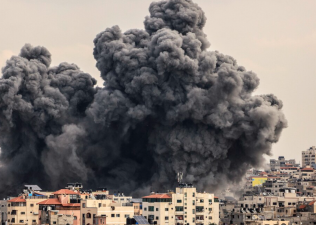
Global journalism is not only navigating technological change but also seeking balanced reporting amidst geopolitical tensions (such as the Russia-Ukraine conflict and the Israeli-Palestinian conflict). Disappointment with the reporting tendencies of mainstream Western media has led some audiences to seek information from non-Western perspectives, further exacerbating the diversification and fragmentation of the global information ecosystem.
Summary
The current international situation is complex and volatile. The Russia-Ukraine conflict, Sino-US friction, the Middle East turmoil, and economic security issues are intertwined, reshaping the world order. You need to interpret information from multiple perspectives and be wary of the global impact of localized instability. At the same time, interactions between nations are becoming increasingly close and complex, with a new round of cooperation and competition quietly unfolding.
Grasping the international situation means grasping the initiative for the future. Whether focusing on great power competition, regional security, or personal studies and overseas development, information sensitivity and critical thinking skills are indispensable.