What’s Happening Around the World Right Now
We care about what's happening in the world because these events affect our lives and future. Currently, the world is undergoing significant changes, including shifts in economic structure, wealth distribution, demographics, and technological revolution. These changes are not only altering the global economic landscape but also profoundly impacting the future of human society. A series of profound and intertwined major events are unfolding globally, encompassing geopolitical conflicts, economic turmoil, technological change, and the climate crisis, among other dimensions.
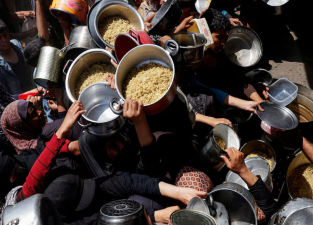
The Middle East crisis is spilling over, triggering food security risks in many parts of the world
Affected by the spillover effects of the Middle East conflict, many countries in Africa and Asia are facing severe challenges such as soaring energy and food prices and disruptions to humanitarian supply chains.
Supply chain disruptions trigger a hunger crisis
The chain reaction spreading from the Middle East is impacting impoverished communities thousands of miles away. Due to transport delays, port congestion, and security risks in the Red Sea shipping lanes, the cost of transporting food, energy, and medicine has skyrocketed. According to the World Food Programme, if the conflict continues until the middle of this year, an additional 45 million people worldwide may face hunger, bringing the total number affected by hunger to 363 million, potentially becoming the worst hunger crisis in history. In Nigeria, Somalia, and Myanmar, fuel and staple food prices are soaring, severely reducing the purchasing power of ordinary families. High transportation costs are forcing families who spend the majority of their income on food into dire straits.
Soaring costs are impacting agricultural production
The spillover effects of the conflict are severely impacting small farmers. Fertilizer shortages and soaring energy prices are directly leading to increased operating costs, which in turn are reducing agricultural yields and profits. In Asia, some farmers, unable to bear rising costs, have been forced to abandon rice cultivation this season. This production halt not only impacts farmers' livelihoods but could also create a larger-scale food supply gap.
The situation is equally dire in East and Southern Africa. In Kenya, for example, due to extreme fertilizer scarcity, farmers are even queuing in the early morning to purchase rationed fertilizer. Aboubakar, head of vulnerability analysis for East and Southern Africa at the World Food Programme, points out that while shelves won't be empty, prices will exceed people's purchasing power.
Regional Challenges Amid Multiple Crises
In West and Central Africa, the negative impacts of conflict are only just beginning to emerge. Research shows that if basic food prices rise by 10%, vulnerable households will have to spend over 90% of their budgets on food.
Meanwhile, some Southeast Asian countries are also mired in crisis due to their heavy reliance on Middle Eastern energy. In Myanmar, the national average diesel price has risen by nearly 200% since before the crisis, leading to severe fuel rationing and long queues at gas stations. For communities still recovering from the previous earthquake disaster, soaring fuel and basic food prices are undoubtedly adding insult to injury, directly threatening livelihoods in rural areas.
Transformation and Dilemmas of Humanitarian Aid Strategies
Faced with the dual pressures of rising transportation costs and depleted humanitarian funds, international aid organizations have had to adjust their operating models. The World Food Programme is attempting to minimize logistical costs by shortening distribution cycles, sourcing food locally in recipient areas, and shifting towards cash aid.
However, these strategic adjustments cannot fully offset the pressures of global inflation. With continued price increases and currency devaluation, even maintaining the existing level of aid is becoming less effective. If the Middle East conflict continues, millions of people already experiencing multiple crises will be pushed to the brink of collapse. The immediate priority is to ensure that humanitarian corridors remain open and to seek more financial support to address this unprecedented challenge.
Civilian casualties in Ukraine continue to rise as humanitarian needs escalate alongside attacks
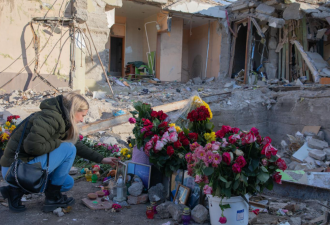
The conflict in Ukraine has seen a "shocking escalation" in recent times, with Russia continuing airstrikes on multiple regions, expanding the scope of attacks to residential areas and critical civilian infrastructure. This has resulted in a continuous increase in civilian casualties and worsening infrastructure damage, while no substantial progress has been made diplomatically.
Escalation of Conflict Leads to Increased Civilian Casualties
Multiple regions in Ukraine continue to be attacked, with the attacks expanding from frontline areas to several cities, causing damage to residential areas, civilian infrastructure, ports, railways, and energy systems. A series of recent airstrikes have resulted in the deaths and injuries of civilians, including children, with some attacks being among the deadliest this year.
Following Ukraine's proposal for an Easter ceasefire, Russia announced a brief ceasefire, but this was not observed, and hostilities continued in frontline areas during the holiday period, causing casualties.
A series of nightly airstrikes from April 13 to 16 resulted in dozens of civilian casualties. The attacks on the nights of April 15 and 16 were the deadliest this year, affecting multiple locations including Odessa, Dnipropetrovsk, Kyiv, Sumy, and Kharkiv, killing at least 20 people, including children. Last month alone, at least 211 civilians were killed and 1,206 injured in Ukraine; since February 2022, at least 15,578 civilian deaths have been confirmed, including 784 children, and 43,352 have been injured.
Infrastructure and Cultural Heritage Continue to Be Damaged
Key civilian infrastructure in Ukraine continues to be attacked, including ports, railways, and energy facilities, impacting food exports and livelihoods. Cultural heritage sites in Lviv and other areas have also been damaged; 519 cultural sites have been damaged since the start of the war. Civilian casualties have also been reported in parts of Russia.