Global Developments People Are Paying Attention To
Global development faces increasing instability and uncertainty, but peace and development remain the direction of human progress. Global problems refer to serious issues facing the contemporary international community that transcend national and regional boundaries and relate to the survival and development of all humanity. These include: war and peace, North-South relations, ecological imbalance, environmental pollution, population explosion, resource shortages, international terrorism, transnational crime, and crises of faith.
The vast gap between rich and poor is a global phenomenon.
The rich are getting richer, and the poor are getting poorer; the rich are getting richer, and the poor are getting poorer—this is the reality of the world today. The World Bank's 2002/2001 Development Report stated that at the beginning of the new century, poverty remained a major global problem; of the world's 6 billion people, 2.8 billion lived on less than $2 a day, and 1.2 billion of them lived on less than $1 a day. The per capita GDP of the least developed countries in sub-Saharan Africa fell from $640 in the early 1980s to $510 in the early 1990s, and the gap with developed countries widened from 16.3:1 to 51.7:1. The disparity between the rich in the North and the poor in the South is a prominent feature of the global economy today. This vast wealth gap is also a potential source of social instability and a significant social problem in developed countries. The United States, the largest developed country, also has the greatest wealth inequality. In the mid-1990s, 26.1% of the wealth in the US was concentrated in the hands of the richest 10%, while the poorest 10% held only 1.7%. Reports indicate an increase in aggressive behavior among young people in Europe, primarily due to the continued impoverishment of the lower and middle classes.
The ecological environment transcends east and west, north and south.
A Worldwatch Institute report warns that at the beginning of the new century, the global environment has reached a dangerous crossroads. Currently, global ecosystems are approaching a critical point. Statistics show that in the past 10 years, natural disasters have caused $608 billion in losses worldwide, equivalent to the total losses of the previous 40 years. A United Nations report published in February 2001 stated that in the 21st century, the frequency of extreme weather events such as heat waves and torrential rains will increase globally, leading to an increase in rising water levels, floods, landslides, and avalanches. With continued global warming, droughts, floods, famine, and pandemics will become serious threats to humanity in the 21st century. The environment, as the Earth's life support system, is universally recognized as an indivisible whole, without distinction between East and West, South and North. The ecological environment tightly connects all countries in the world, and environmental pollution knows no geographical boundaries. New concepts and requirements for global human security compel countries to establish a new framework for positive and pragmatic interdependence. This new type of partnership is driven by the mutual interests of both parties, not by one party bestowing favors upon the other; it is about the fair sharing of market opportunities, not the pursuit of unilateral protectionism.
The global drug problem is a serious threat.
The world's drug situation is severe, with new trends emerging. Most notably, global organized crime groups and drug cartels are colluding in various forms, becoming a destabilizing factor threatening the world. Narcotics are becoming increasingly diversified, with various "soft drugs" becoming the new favorites in the drug market. It is estimated that the number of drug users worldwide is increasing at a rate of 3%-4% annually, with the fastest growth in the number of people using synthetic drugs. Experts from the UN Office on Drugs and Crime say that methamphetamine will gradually become the most widely abused, fastest-spreading, and most harmful drug globally in the 21st century. The production, processing, trafficking, and consumption of drugs have formed a deeply entrenched international network. According to the UN Office on Drugs and Crime, the amount of money laundered illegally worldwide each year reaches $1 trillion to $3 trillion; of this, $300 billion to $500 billion is legalized annually through some of the world's financial centers. The drug problem transcends national borders and cannot be solved by any single country alone; close cooperation between drug-exporting and consuming countries is necessary. As international efforts in the fight against drugs deepen, it has become increasingly clear that close cooperation among governments is the only way to completely solve the drug problem.
International Terrorism Intensifies
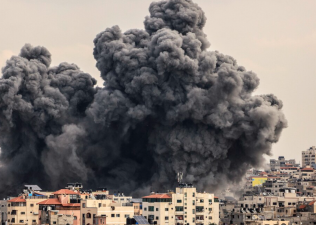
Since the emergence of international terrorism in the mid-20th century, over 1,000 terrorist organizations have existed under various banners, with hundreds of terrorist attacks occurring annually. The 9/11 attacks shocked the world, marking an unprecedented stage in the global wave of terrorism. International terrorism reflects the sharp and complex contradictions among nations, ethnicities, classes, and religions in the world today. Essentially, terrorism is a malignant tumor resulting from the accumulation of economic, political, and cultural contradictions within a country and the interaction of uneven economic and political development between the North and South worldwide. With the development of high technology, terrorists are increasingly employing high-tech means to support their activities. The technological content of terrorist equipment and tools is becoming increasingly sophisticated, with computer-based terrorism and super-terrorism using biological and chemical weapons attracting more attention. Increasing evidence suggests that most terrorist activities have an international background. However, eradicating terrorism is by no means easy, and it cannot be accomplished overnight. News media say that eliminating the threat of terrorism will be a long-term war. Counter-terrorism experts believe that terrorism is not only a "political plague of the 20th century," but also a top priority for world security in the 21st century.
Ethnic separatism runs counter to the trend of the times.
After the Cold War, a prominent feature of the international situation was the surge in ethnic disputes and intensified ethnic conflicts. This is a major root cause of the current international instability and a significant factor influencing international politics and relations in the 21st century. Ethnic issues are a global and complex social problem, related to the internal unity of nations and the stability of the international situation.
In an era of increasing economic globalization, ethnic separatism runs counter to this trend. A major tendency of current ethnic separatism is the pursuit of independence. Another noteworthy trend is that contemporary ethnic separatist forces are increasingly exploiting favorable changes in the international situation to expand existing situations, seek international support and intervention, and demand internationalization.
The impact of globalization on contemporary international relations.
Globalization is a social process independent of human will, and also a dynamic development process with inherent contradictions and duality. While globalization has provided many countries with rare historical opportunities for development, it is also fraught with differences in interests, competition, and even conflict—in a sense, "competition within the scope of globalization." Globalization has brought multifaceted and complex impacts to contemporary international relations.
- Globalization has deepened the interdependence of countries, further solidifying peace and development as the themes of our time; however, its imbalances have also led to a resurgence of power politics for a period, and multipolarity will remain a long and tortuous process.
The accelerating pace of globalization has continuously deepened the interdependence and mutual penetration among countries in economic and other fields, and common interests have also increased. In particular, a relationship has formed among major powers that is both mutually fraught with friction and competition, as well as mutual cooperation and checks and balances. The ability of a single major power to independently resolve or monopolize international affairs is declining, and practices such as intervention, sanctions, and even war that harm the interests of other countries often backfire.
- Globalization has placed increasing challenges and pressures on developing countries regarding national sovereignty, and presented new challenges such as how to effectively safeguard national economic security.
First, globalization has widened the inequality of sovereignty between strong and weak nations. From the perspective of the relative positions of both sides in the relationship, the monopoly of high technology and capital by developed countries has consistently placed developing countries in a passive and vulnerable position. Secondly, the globalization process requires an increasing number of international organizations and rules. Developed countries, leveraging their comprehensive strength, have a greater say in almost all international mechanisms, and the resulting rules of international conduct inevitably grant them greater freedom. On many issues, developing countries must coordinate and cooperate with them, gaining new benefits, rights, and opportunities, while also facing constraints in exercising their supreme power in foreign affairs. Simultaneously, to maintain their vested interests, developed countries often attempt to demand that developing countries relinquish some of their national sovereignty under the guise of "human rights above sovereignty" and "limited sovereignty," using this as a pretext to interfere in the internal affairs of other countries. Their true intention is to sacrifice the interests of developing countries to protect their own.
- A new characteristic of current international relations is that countries around the world will engage in fierce struggles over the formulation and reform of rules of international relations in the era of globalization.
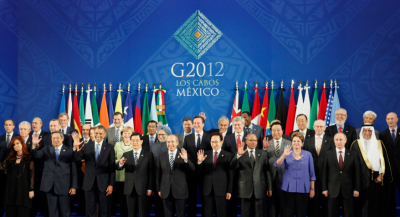
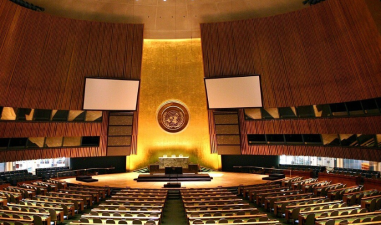
A globalization that brings "win-win" outcomes to all countries must be guaranteed by law and institutions. Globalization objectively demands that international mechanisms play an increasingly stronger role in international relations and possess genuine operational capabilities. However, international mechanisms for addressing global political and economic issues, such as the International Monetary Fund, the World Trade Organization, the United Nations, and the G7, were almost all formed during the Cold War and dominated by Western powers. After the Cold War, the functions and nature of these mechanisms have been increasingly questioned, and they are no longer adequate to satisfactorily address the new problems arising from globalization. In the next 15 years, given the current international political and economic power structure, a major overhaul or complete dismantling of these mechanisms is unlikely. However, the struggle surrounding the reform of international mechanisms will be extremely fierce, involving both the adjustment of interests among major powers and the redistribution of interests in North-South relations. This trend has already begun to emerge in the negotiations of the World Trade Organization during the new millennium round. It is certain that in the next 15 years, countries around the world will engage in fierce struggles over the formulation and reform of rules of conduct for international relations in the era of globalization, which will become a prominent feature of international relations.