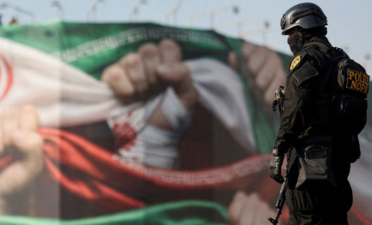
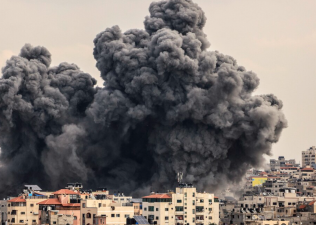
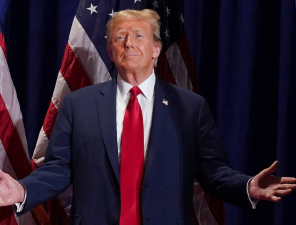
In a letter of protest to UN Secretary-General António Guterres and Security Council President Abukar Dashir Osman, Iraqi strongly urged the international community to condemn the actions of the United States and Israel in inciting violence and grossly interfering in Iran's internal affairs. Iraqi stated in the letter, "Such reckless rhetoric clearly encourages political instability and incites violence, posing a direct threat to the sovereignty, territorial integrity, and national security of the Islamic Republic of Iran." He urged UN member states and the Security Council to take action to condemn the US's policy of threatening force and interference in all forms, and demanded that the US and Israel immediately cease their destabilizing practices in the region.
On the 13th, Russia also publicly condemned the "subversive external interference" in Iran's internal affairs, warning that any repetition of last year's US strikes would have "catastrophic consequences" for Middle East and international security. Russian Foreign Ministry spokeswoman Maria Zakharova also accused the EU of openly supporting Iran's anti-government actions on the 14th, calling it a blatant attack. She stated, "This EU policy is in effect an open support for Iran's anti-government actions, a support for the insurgency. The West is undermining international law by exerting illegal pressure on Iran."
During a visit to a Ford plant in Detroit, Trump told reporters that Americans in Iran should consider leaving. Before taking the stage, Trump told reporters he "didn't know the exact number of casualties caused by Tehran's recent escalation of its crackdown on protesters." He said, "I've heard five different numbers. Look, even one death is too many." The Wall Street Journal reported that on Air Force One returning to Washington, D.C., Trump told reporters he was awaiting a report on the latest situation in Iran and dismissed the country's leaders' threats of retaliation against any U.S. attack. He pointed to a military attack last June that destroyed Iran's nuclear capabilities, adding, "That's what Iran said last time. They better behave."
On the evening of the 13th local time, in an interview with CBS, Trump reiterated that "Iranian citizens will receive substantial aid." He revealed that this "aid" would take "different forms," including economic assistance, but he also mentioned the U.S. military's attacks on three Iranian nuclear facilities last year. Trump also stated that if the Iranian regime executes anti-government protesters, the U.S. will "take very strong action." When asked about his ultimate goal in Iran, Trump said, "To win. I like to win." He then cited a series of military successes as examples of past achievements, including last year's strikes against Iran, the forcible seizure of Venezuelan President Maduro earlier this month, and the killing of ISIS leader Baghdadi.
The Wall Street Journal, citing sources from Gulf Arab states, reported that the US had previously warned Saudi Arabia and other countries to prepare for a possible US strike against Iran. Saudi Arabia, Oman, Qatar, and other Gulf Arab states subsequently lobbied the White House, telling them that if the US attempted to overthrow the Iranian regime, the oil market would be disrupted, ultimately harming the US economy. The Gulf states' biggest concern was the potential impact on their domestic stability. The report also stated that, according to Saudi officials, Saudi Arabia has assured Iran that it will not be drawn into a potential conflict or allow the US to use its airspace for strikes, striving to distance itself from the US and deter military action.
According to two sources familiar with the matter, Iranian Foreign Minister Araqchi proposed a meeting with US Special Envoy Witkov in Switzerland next week, prior to the World Economic Forum. An Arab diplomat and a senior European official revealed that Iranian diplomats are attempting to find ways to restart nuclear negotiations and persuade the United States to abandon its plan to use force against Iran. The Arab diplomat stated that Iranian diplomats have now agreed to direct negotiations with the United States, a shift from Tehran's previous insistence on indirect negotiations. However, he also pointed out that Iran still insists on retaining its right to enrich uranium, a point that is unlikely to be accepted by the United States.
Three latest observations:
Iranian officials claim that all towns are currently under control.
This means that the large-scale anti-government demonstrations have been largely quelled. However, the process was dramatic, bloody, and heartbreaking. Iranian Foreign Minister Araqchi stated that initially, the demonstrations were relatively peaceful, but as some individuals infiltrated the protests, they erupted again in a different form and escalated into violence. According to him, these people even attacked religious sites, with over 350 temples set on fire. "This is truly unbelievable. No Iranian would dare set fire to a religious site," he claimed. He asserted that Iran possessed substantial evidence proving US and Israeli involvement in "terrorist activities" within Iran, and that, as we see in the West, protests turned violent and were suppressed by security forces.
This is the official Iranian narrative, but in the Western narrative, Iran forcefully suppressed the demonstrations, resulting in over 500 deaths. The Iranian flag was torn down at the Iranian embassy in London, and Iranian diplomats were barred from entering the European Parliament building. In a tit-for-tat response, the Iranian Foreign Ministry summoned the ambassadors of Britain, Germany, Italy, and France on the 12th, arranging for them to carefully watch videos of protesters firing at police and military, and then filming them watching the videos… A cognitive war raged. But history has repeatedly shown that while the voices on the streets can be reversed, the hand holding the gun often determines the final chapter of the story.
Large-scale rallies in the streets of Iran in support of the government's punishment of rioters.
In Tehran, Khorramabad, Birjand, Zahedan, and Rasht, large numbers of people took to the streets, holding banners, Iranian flags, and photos of the Supreme Leader to express their support for the country. Iranian television quoted Iranian officials as saying, "This nationwide rally demonstrates the unity of the people, and this unity is the guarantee of the country's resilience." Iranian President Pezechzian and other high-ranking government officials also joined the crowds in the streets, promising that the government was "willing to listen" to the people's voices. Supreme Leader Khamenei stated: "Today (January 12th), you have accomplished a great feat, creating a historic day." These large-scale rallies, filled with unwavering determination, thwarted a conspiracy by foreign enemies to use domestic mercenaries. It's a poignant scene: the same streets, just days before, were filled with demonstrations against the government; now, they are rallies in support of the government. The same land can bear such drastically different cries in just a few days—perhaps this is the complex tapestry of politics and public sentiment.
It must also be said that the Iranian regime is clearly more stable than the West anticipated.
The US attitude has undergone another subtle shift.
Previously, the US repeatedly threatened to take action against Iran, even deploying a large number of bombers to Europe. All US operational plans against Iran were declared "present to Trump." War seemed imminent. But a day later, the US attitude suddenly changed. White House spokesman Levitt stated on the 12th that regarding the current situation in Iran, "airstrikes are just one of Trump's many options; diplomacy remains his first choice." After all, it's a matter of life and death. Iranian Parliament Speaker Ghalibaf warned on the 12th that if Iran were attacked, it would give the US "a lesson it will never forget."
Iranian Foreign Minister Araqchi disclosed that Iran is prepared for all possibilities, including war, and hopes the US will make a "wise choice." Furthermore, Iran is prepared to negotiate with the US on the basis of "mutual respect." More importantly, there is hesitation within the US military.
In addition, even if Israel does not act with the US, Iran will still target Israel and launch a large number of missiles into Israeli territory, which would lead to an escalation of the war, making it difficult for Israel to defend against. Furthermore, Iran has consistently accused the United States and Israel of instigating protests. Now that the US military has personally launched an attack, it will backfire, prompting Iran to unite against external threats and actually helping the Iranian government.