International News That Is Driving Global Discussions
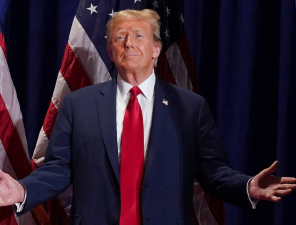
This was truly a dramatic modern diplomatic "duel"—across the Atlantic, two leaders with vastly different styles clashed in a short span of hours on the silent battlefield of social media. On one side was the Twitter-loving US president, who, with his signature "art of the deal," unleashed a tariff list; on the other, the French president, well-versed in EU leadership, swiftly responded with a strong rebuttal, his words conveying an unwavering commitment to "European unity." This confrontation, ostensibly triggered by Greenland, a frozen land in the Arctic Circle, actually raises profound questions about great power rivalry, alliances, and the future of global order.
The First Contest:
"Sovereignty" and "Presence" on the Arctic Chessboard
Trump's tariff threat, seemingly abrupt, actually precisely targeted a series of recent actions by European countries in Greenland. The participation of France, Germany, and the UK in the Danish-led "Arctic Endurance" exercise was far from a routine military training exercise. Macron's statement pinpointed the crux of the matter: "Greenland is a matter of Arctic security and the security of Europe's frontiers." With global warming, the strategic and economic value of the Arctic shipping routes is increasingly prominent, and this once-frozen land is becoming a "new frontier" for great power competition.
The collective appearance of European countries in Greenland sends a core message: Arctic affairs cannot be conducted without a European voice; Europe's frontier security must be defended by Europe itself. Behind this lies Europe's deep anxiety about its own geostrategic space and its concern that the Arctic may be "divided up" or dominated by a few major powers. Macron's emphasis on "supporting Denmark in upholding its sovereignty" is not only moral support for an ally but also a declaration that Europe as a whole possesses an undeniable "right to exist" and "voice" in the Arctic region, which is crucial to its vital interests. Trump's attempt to use the term "purchase," reminiscent of 19th-century colonialism, to describe a highly autonomous region is itself a disregard for modern international relations norms and crosses Europe's red line on issues of sovereignty and dignity.
The Second Confrontation:
The "Art of the Deal" Clashes with "European Unity"
Trump's strategy is familiar to us. He views tariffs as a panacea, both an economic lever and a political bargaining chip. His announced two-step tariff plan (10% from February 1st to 25% on June 1st) is clearly a meticulously designed "pressure package," intended to create a sense of urgency and force relevant European countries to concede on the absurd issue of "buying Greenland," or at least compromise in other areas.
However, this time, his "art of the deal" may have seriously misjudged the target and timing. Macron's response did not remain at the level of France alone, but clearly put forward the core position that "Europe will unite and coordinate its response." This is not an empty slogan. In recent years, from responding to the US's unilateral imposition of steel and aluminum tariffs to establishing a euro settlement system to bypass sanctions against Iran, despite internal divisions within the EU, its willingness and ability to coordinate and unite in dealing with external pressure, defending multilateral trade rules, and upholding "strategic autonomy" are increasing. Macron is a staunch advocate of the "European sovereignty" concept. Trump's tariffs, far from dividing Europe, may actually act as a shot in the arm, prompting core countries like France and Germany to work harder to bridge internal differences and unite against external threats. Macron's statement, "No intimidation or threat can shake us," was addressed not only to Washington but also to European capitals like Berlin, The Hague, and Helsinki.
The Third Contest:
The Clash Between Rules-Based Order and the Logic of Power
This conflict transcends simple trade friction or geopolitical competition; at a deeper level, it represents a clash between two logics. One is the logic of rules-based multilateralism and international cooperation, the cornerstone of European integration and global trade development since World War II. The other is the logic of unilateralism and power politics under "America First," where everything is tradable and rules serve power.
Europe, especially France, has long considered itself a crucial pillar of multilateralism and global governance. The Trump administration's frequent use of tariffs under the guise of national security, highly politicizing and weaponizing trade issues, has severely impacted the international rules-based system that Europe believes in. Macron's criticism of the move as "unacceptable and out of step" is a direct rejection of this rule-breaking behavior. The term "out of step" is particularly sharp, implying that this blatant coercion runs counter to the mainstream trend of interdependence, dialogue, and cooperation among nations in the 21st century.
Europe's response will be a crucial test. Will it succumb to short-term pressure and seek bilateral deals with the US, or will it stand firm and jointly uphold the rules through joint countermeasures and appeals to the WTO? This will determine the future nature of transatlantic relations and the direction of the global governance system. Macron is betting on the latter; he is attempting to prove that a united Europe is capable of becoming a key force on the international stage in resisting unilateralism and maintaining a multipolar balance.
Conclusion
Beneath the icy plains of Greenland, undercurrents of great power strategy surge; a tariff threat on social media has exposed deep rifts beneath the surface of transatlantic alliances. Trump's "deal" may have been intended to test, pressure, and disrupt, but Macron's strong response clearly drew a red line: sovereignty is not negotiable, unity cannot be divided, and rules cannot be trampled upon.
This confrontation had no winners, but it clearly revealed a trend: the old model of alliances is dismantling, and traditional ties based on shared values and interests are being eroded by utilitarian calculations. Europe is painfully learning how to speak with one voice and defend its interests and principles with collective power. Regardless of how this tariff crisis ultimately ends, it has already cast a long shadow over the evolution of transatlantic relations and even the global landscape. The world is getting used to the absence of "taken-for-granted" allies, and only the ever-changing balance of interests and power. And a "united Europe" is a crucial variable in this great transformation, still striving to take shape.