For the domestic public, the dissemination of international news helps to subtly solidify mainstream values. Communication studies have a well-known theory of persuasion, in which the source of the communication (the communicator) plays a crucial role. The communicator's credibility, authority, and motivation directly influence the effectiveness of the communication. While the media are the disseminators of international news, they are also, to some extent, states and governments. Because the media often acts as a third party, it enjoys high credibility and authority in the eyes of the audience, especially regarding international news. After all, this is something unrelated to my country's interests, so most domestic citizens generally accept international news readily. However, in reality, all communication has a persuasive motivation. The audience will investigate the communicator's motives; therefore, the deeper the communicator's intentions and motivations are concealed, the better the communication effect. Thus, international news for domestic audiences often serves as a tool for disseminating values and mainstream ideology, helping to consolidate national stability. While it certainly allows people to understand what is happening internationally, it is largely through layers of empathy and indoctrination.
Macron's Strong Stance
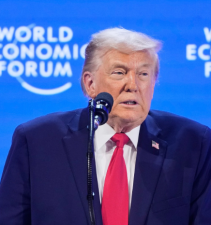
On January 20, French President Emmanuel Macron attended the World Economic Forum in Davos, stating that Europe would not yield to bullies or be intimidated. Macron said, "We are heading towards a world without rules, where international law is trampled upon, and the only law that matters is the law of the strong. Imperial ambitions are resurfacing." He also claimed that the United States is attempting to weaken and control Europe, and that tariffs are being used as leverage to infringe on territorial sovereignty. This statement was seen as a response to previous threats from Trump.
Abe Assassination Suspect Sentenced to Life Imprisonment
On January 21, local time, the Nara District Court in Japan delivered its verdict in the assassination case of former Japanese Prime Minister Shinzo Abe, sentencing the defendant, Tetsuya Yamagami, to life imprisonment.
US Government Responds to "Kill Line" for the First Time
On January 20, local time, US Treasury Secretary Bessenter held a public event at the World Economic Forum Annual Meeting. When asked about his views on the "kill line" phenomenon, Bessenter stated that "the kill line is the fault of the previous administration." Bessant said, "During the Biden administration, the things they (low-income families) care about most—food, groceries, rent, etc.—have all increased by 35% to 37%. We're trying to bring them down every day. If you look back at President Trump's first term, you'll find that hourly workers are doing better than management. I believe the family you described will receive a substantial tax refund."

Venezuela's Acting President: $300 Million in Oil Revenue Received
Venezuela's acting president, Rodríguez, stated on the 20th that Venezuela has received $300 million in oil sales revenue. This is the first payment following US President Trump's announcement of a 50 million barrel oil supply agreement with Venezuela. Rodríguez's brother, Jorge Rodríguez, president of the Venezuelan National Assembly, said that day that the first debate on reforms to the country's main oil law is expected this week.
Putin Says He Can "Allocate" $1 Billion to the "Peace Committee"
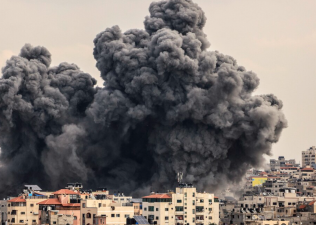
According to the Kremlin website on the 21st, Russian President Putin confirmed that US President Trump invited Russia to join the so-called "Peace Committee" initiated by the US, and Russia will consult with its strategic partners on this matter. Putin stated that, given the special relationship between Russia and the Palestinian people, even though Russia has not yet decided whether to participate in the so-called "Peace Committee," it can still "allocate" $1 billion from its frozen assets in the US to the "Peace Committee."
Greenland Releases Emergency Manual, Recommends Stockpiling Supplies
Amid Trump's repeated threats to annex Greenland, the Greenlandic government released an emergency manual on the 21st, recommending that each household stockpile at least five days' worth of basic necessities. Hunting weapons, ammunition, and fishing gear are also included in the recommended stockpiling list. The manual does not mention any threats from the US. Local officials stated that the manual is like insurance and is not expected to be actually used, but they hope the public will be prepared for any eventuality.