On November 29, 2025, the international situation will be complex and volatile, with geopolitical conflicts, great power rivalry, and technological revolutions intertwined, driving adjustments in the global order and requiring vigilance and in-depth analysis. The international situation continues to exhibit a complex and volatile trend. Geopolitical conflicts persist in multiple regions, the rivalry between great powers intensifies, and technological innovation continues to drive profound changes in the global order. Faced with these intricate dynamics, we need to remain highly vigilant and conduct in-depth analysis to obtain a comprehensive and objective perspective.
Recent events, such as the US's renewed implementation of the Monroe Doctrine, its military intervention in Venezuela, its territorial claims to Greenland, and the widening rift in US-EU relations, are profoundly reshaping the international landscape. These changes are mainly reflected in trends such as accelerated multipolarity, challenges to the alliance system, increased rule-breaker behavior, and the rise of a global southern power.
The dual impacts of hegemonism and globalization have complicated international relations and challenged the global order
Analysis of the Causes of Instability
Disintegration of Strategic Balance
Judging from the current situation, the world in 2026 will likely remain turbulent, with no significant improvement compared to 2025. This is mainly due to the following reasons: First, the global power imbalance since the Cold War, and the disintegration of the strategic balance of power. Since the end of the Cold War and the collapse of the Soviet Union, the global strategic balance has been completely overturned, and the power balance among countries has become severely imbalanced. It is against this backdrop that hegemonism has been able to run rampant, and the global order has suffered a severe blow. Events such as NATO expansion and color revolutions have further destroyed the global balance of power. The strategic balance of power is the foundation for maintaining global stability; now that this foundation has vanished, instability and chaos have become inevitable results.
Retreat of Globalization
Second, the retreat of globalization will lead to a reshaping of international relations. The globalization trend, which has attracted much attention in recent years, will further accelerate its retreat in 2026, becoming a major characteristic of that year. The retreat of globalization will not only impact the global economic structure and trade relations, but also have a profound effect on political relations between countries. Against this backdrop, the global market will face a re-fragmentation, and trade wars will expand from conflicts between the United States and other countries to include more nations. Trade frictions between China and Japan, Europe and Russia, oil-exporting countries, and developing countries are likely to intensify, and various forms of financial and trade conflicts will escalate. Correspondingly, the reshaping of trade relations will further drive a profound restructuring of security relations. This involves not only the security structures of blocs and regions, but also security ties between nation
Can a Lasting Ceasefire Be Achieved in the Gaza Strip?
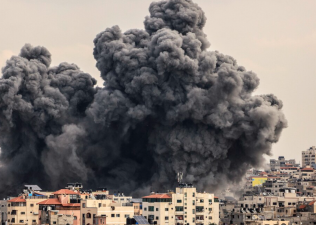
The first phase of the Gaza ceasefire agreement took effect on October 10, 2025, putting a pause on the new round of Israeli-Palestinian conflict that had lasted for more than two years. However, true peace is far from being achieved. Currently, sporadic clashes continue between Israel and the Palestinian Islamic Resistance Movement (Hamas). The second phase of the ceasefire agreement will touch upon long-standing structural contradictions between the two sides, including key issues such as Hamas disarmament, Israeli withdrawal from Gaza, and Gaza reconstruction, making negotiations and bargaining even more complex.
In 2026, two major uncertainties will plague Israeli politics: the progress of Prime Minister Netanyahu's corruption trial and the upcoming parliamentary elections in October to determine the next prime minister. Whether the Netanyahu government will take risks to appease domestic right-wing forces and how the Israeli political landscape will change are matters of great concern.
Meanwhile, the US's attempt to lead the establishment of a so-called Peace Council and International Stabilization Force to address post-war governance in Gaza remains vague on several key issues and has not explicitly reaffirmed its firm commitment to the "two-state solution," causing deep concern.
The Israeli-Palestinian conflict, involving conflicts and contradictions between Israel and Lebanon, Israel and Iran, and Israel and the Houthi rebels in Yemen, will profoundly impact the Middle East situation and even the global geopolitical landscape.